FORMER REFEREE’S VERDICT ON MAJOR DECISIONS THAT ALTERED MAN CITY VS SUNDERLAND PGMOL HAVE TO REVIEW.
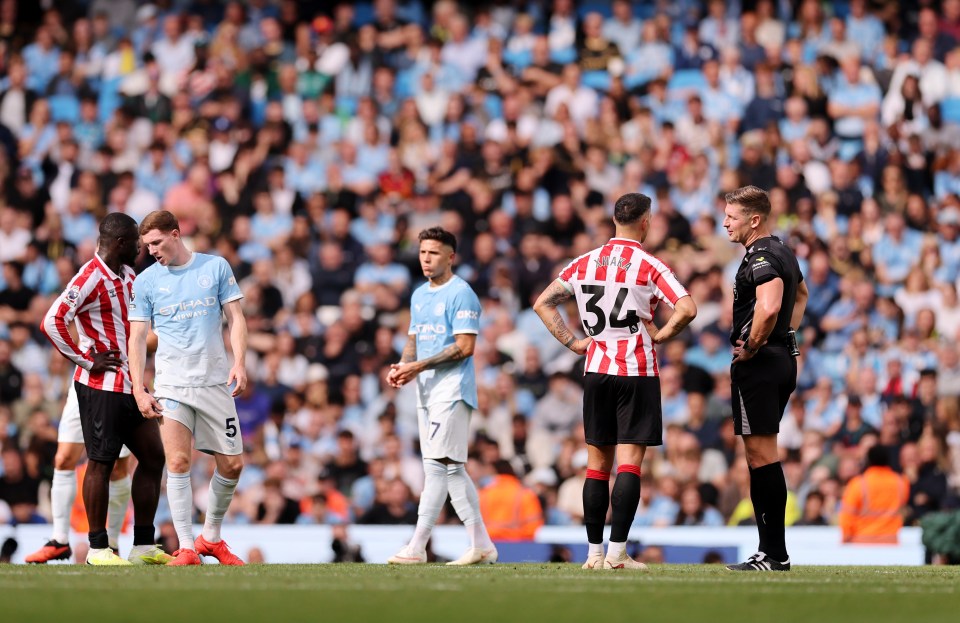
Refereeing at the highest level is never easy, and I have spent much of my career defending the men in the middle. But some matches leave you with questions that are difficult to set aside. Manchester City’s 5–3 victory over Sunderland was one of them. After reviewing the key moments, I believe two decisions shaped the outcome of this game and PGMOL should acknowledge that Sunderland were let down.

Let me begin with the decision that, in my view, was handled correctly. Late in the match, Erling Haaland appeared to score another goal for Manchester City, but the assistant referee immediately raised the flag for offside. Initially, it looked as though Sunderland had been given a reprieve.
VAR, however, intervened. After reviewing the footage, the officials determined that Josko Gvardiol was onside in the build-up. The original offside decision was therefore overturned and Haaland’s goal was allowed to stand.
That was the correct outcome. VAR did its job there. The technology examined the players’ positions more accurately than the naked eye could. I have no complaint about that decision.
There was also another check Brian Brobbey’s second goal for Sunderland was reviewed for offside and allowed to stand. Fine. That was correct too.
But the fact that VAR got those right only makes the next decision harder to swallow.
DECISION TWO: THE ELLIOT ANDERSON HANDBALL A CLEAR MISS
Now let me be direct about the moment that truly changed this match. With Manchester City leading 3–2, Sunderland were pushing for an equaliser when Enzo Le Fée challenged for the ball inside the City box. The ball made contact with the hand or arm of City midfielder Elliot Anderson. Referee Robert Jones waved play on. VAR Michael Salisbury checked it. Nothing.
This, in my view, was the wrong outcome and it is the decision that most damaged Sunderland’s chances.
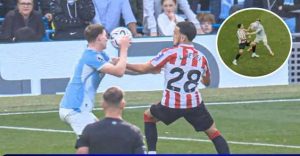
I’ve watched the replay dozens of times. The arm was not tucked into the body. It was extended, in a position that made the body unnaturally bigger. Under the handball laws as they are applied in the Premier League, that is exactly the kind of contact that should be punished. The ball touching the arm alone isn’t automatically a foul, correct. But when you combine the arm’s position, the movement of the player, and the fact that it blocked a genuine attacking threat in the box, this should have been a penalty.
At 3–2, Sunderland were one goal away from a level game. A converted penalty makes it 3–3. Instead of chasing the game, they would have had the momentum. Who knows how the final minutes would have played out? That is not speculation — that is a fundamental shift in the match state, and it was caused by a decision I believe was wrong.
Mark Halsey has already said VAR should have taken a closer look. He is right. And Régis Le Bris’s frustration after the match was entirely justified. When a manager says he cannot understand a decision, and a former referee agrees with him, the officiating team needs to answer for it.
If the technology is there to correct clear and obvious errors, why was it not used here? Why did Salisbury, with the benefit of replays, not send Jones to the monitor? The inconsistency is what frustrates managers, players and supporters alike.
THE VERDICT: SUNDERLAND WERE WRONGED, AND PGMOL SHOULD SAY SO
I have been in Robert Jones’s position. I know how fast the game moves. I know how difficult it is to see everything. But that is exactly why VAR exists to catch what the referee misses. When VAR fails to correct a clear error, the system has failed, not just the referee.

The Anderson handball was a penalty. I am convinced of that. The score at the time was 3–2. A goal there changes everything. Sunderland were not merely unlucky; they were denied a legitimate opportunity to equalise by a decision that should have been overturned.
Did that single decision cost Sunderland the match? Football is rarely that simple. City scored five goals. Sunderland scored three. There were chances at both ends. But to dismiss the penalty appeal as insignificant would be dishonest. At 3–2, the game was on a knife-edge. The decision tilted it away from Sunderland.
PGMOL must acknowledge this. The organisation has apologised to clubs before when clear errors have been made. It should do so again here. Sunderland deserve that much. Their players, their manager and their supporters deserve to hear that the handball decision was wrong.
Two decisions stood out in this chaotic, eight-goal thriller: the offside that was correctly overturned, and the penalty that should have been given. The first shows VAR can work. The second shows it still fails when it matters most.
I have spent my career defending referees. But defending the indefensible does no one any good. PGMOL should apologise to Sunderland and it should do so without delay.